Escuela Politécnica Superior de Zamora
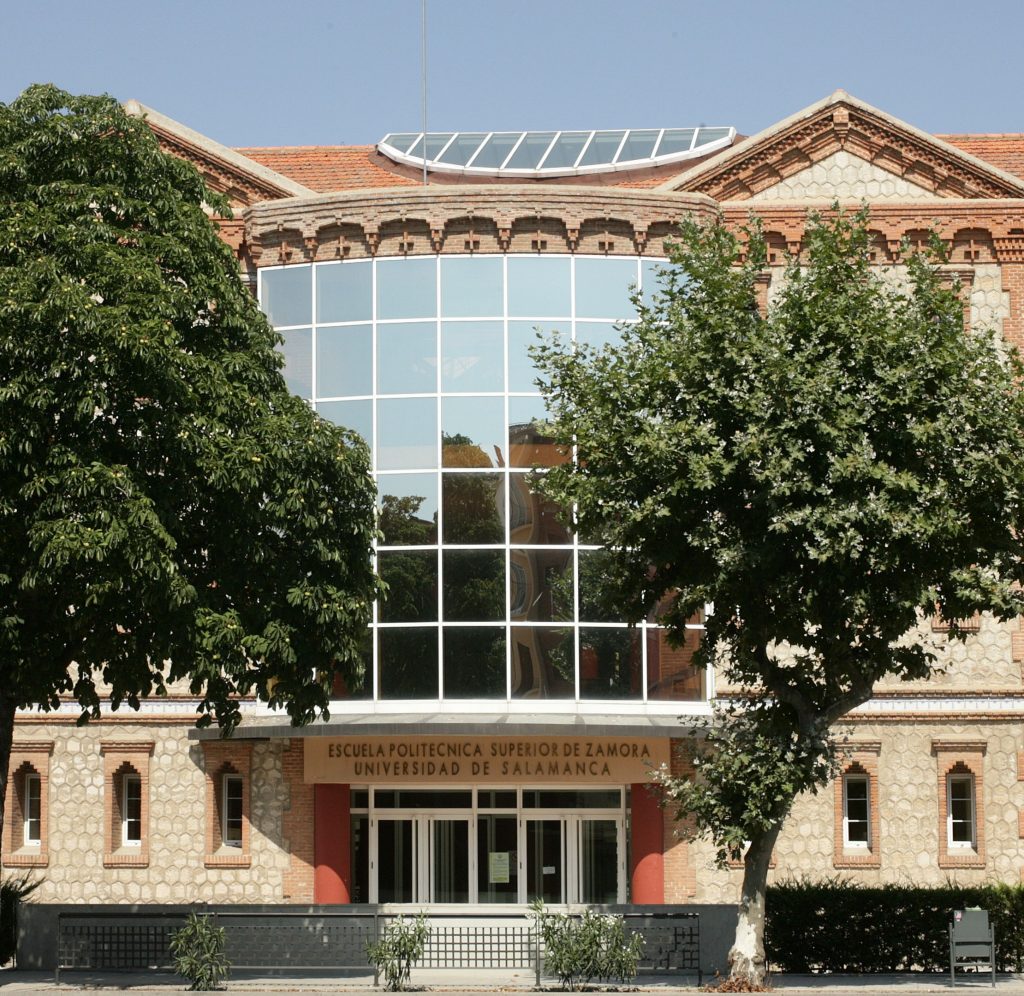
The 15th edition of the Technological Ecosystems for Enhancing Multiculturality (TEEM) conference will take place from October 19 to 22rd, 2027, at the Escuela Politécnica Superior de Zamroa (EPSZ), Zamora, Spain.
The Escuela Politécnica Superior de Zamora (EPSZ), part of the Universidad de Salamanca, traces its origins to the School of Industrial Technical Engineering established following the incorporation of Zamora’s Universidad Laboral into the education system under Decree 2061/1972 of 21 July. In 1989, steps began to integrate these engineering programmes into the Universidad de Salamanca. In 1990, Royal Decree 1049/1990 reorganised the institution as the Escuela Universitaria Politécnica de Zamora, offering programmes in mechanical engineering and civil engineering. Technical Architecture was added in 1996. A major milestone was the move to the Viriato Campus, created by converting a former military barracks into university facilities with strong public support. The School’s new facilities opened on 14 January 1998. By 1999, the Spanish Official State Gazette (BOE) was already using the name Escuela Politécnica Superior de Zamora when it published the curriculum for the Materials Engineering programme.
Today, EPSZ offers seven bachelor’s degree programmes: Technical Architecture; Agri-Food Engineering; Civil Engineering, specialising in Civil Construction; Materials Engineering; Computer Engineering in Information Systems; Mechanical Engineering; and Development of Interactive 3D Applications and Video Games. It also offers two double-degree programmes: Materials Engineering with Mechanical Engineering, and Computer Engineering in Information Systems with Information and Documentation. Postgraduate courses include university master’s degrees in Mechatronics Engineering and in Data Science and Artificial Intelligence Applied to Engineering, as well as a university-specific master’s degree in Project Management, available both on campus and online. These programmes reflect the School’s growth from its industrial roots into a wider range of engineering and digital fields.
Alongside teaching, EPSZ supports research across many fields. There are 36 research groups linked to the EPSZ, working in areas such as agri-food engineering, materials and sustainable construction, mechanical engineering, water resources, computer science and artificial intelligence, educational technology, and heritage conservation. This range of expertise connects technical education with interdisciplinary research.